
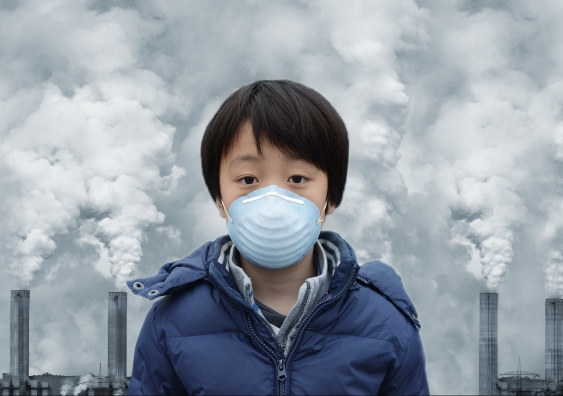
Something important is happening in 2026, and it's easier to see if you look at three stories together rather than separately: the slow unwinding of American oil influence, a quiet EPA rule that lets coal plants keep dumping toxic metals into US waterways, and the World Health Organization declaring — more forcefully than ever — that climate change is a public health emergency. These aren't unrelated headlines. They're the same story.
When "Energy Dominance" Starts to Fray
For years, US energy policy has been built around a single premise: that American oil and gas is a geopolitical asset, a source of leverage and economic strength. That premise is under real pressure now. Technology cost curves for solar, wind, and battery storage have moved faster than almost any forecast predicted. China has scaled its clean-energy manufacturing at a pace that shapes global markets — not just its own grid.
The result is a growing mismatch. Domestically, the political conversation is still framed around "energy dominance." Globally, the ground is shifting toward whoever controls the manufacturing, the supply chains, and the grid infrastructure of the next energy system. Price volatility, grid reliability debates, and the weaponization of "energy security" as a talking point are symptoms of that mismatch — not signs of strength.
What Deregulation Actually Looks Like
Against that backdrop, the EPA's recent move to loosen coal wastewater rules deserves more attention than it's getting. The rollback allows more coal-fired power plants to avoid or delay compliance with limits on the discharge of toxic contaminants — arsenic, mercury, selenium, lead — into US waterways.
This isn't framed as climate policy. It's framed as supporting affordable, reliable electricity. But the practical effect is the same: communities downstream carry the health burden while the accounting stays off the books. Regulatory rollbacks rarely announce themselves as threats to public health. They arrive as paperwork adjustments, compliance timeline extensions, and cost-benefit recalculations — and the consequences show up years later in water quality reports and hospital records.
Regulatory rollbacks rarely announce themselves as threats to public health. They arrive as paperwork adjustments — and the consequences show up years later in hospital records.
The pattern matters beyond coal. When a regulatory framework loosens in one sector, it signals to others that the enforcement window has shifted. The cumulative effect on air, water, and community health is rarely captured in any single headline.
A Smarter Frame: Climate as Health Emergency
Which is exactly why the WHO's recent framing is significant. In a May 2026 statement, the WHO's European office said plainly: climate change is a health crisis — and treating it as one changes what gets measured, funded, and prioritized.
The health frame makes the stakes tangible in ways that carbon metrics often don't. Heat deaths are already climbing. Wildfire smoke is now a recurring air quality event across regions that never planned for it. Infectious disease ranges are expanding. Food and water insecurity are displacing populations in ways that health systems aren't built to absorb. Calling this a health emergency — not just an environmental one — brings hospitals, public health agencies, and national surveillance systems into the response, rather than leaving them as bystanders.
The Infrastructure That Changes the Math
It's easy for a story like this to feel relentlessly bleak. But the physical infrastructure of the transition is actually moving, and two examples are worth keeping in view.
Electric freight corridors are beginning to take shape along high-traffic routes like the Houston–Dallas I-45 corridor. Trucks account for a disproportionate share of diesel emissions and roadway air pollution, particularly in communities along major freight routes. Corridor-scale charging infrastructure doesn't just cut emissions — it changes the economics of fleet electrification for operators who couldn't justify the switch alone.
At the household level, mandatory washing-machine microplastic filters represent something different: a design fix that reduces pollution without requiring individual behavior change. The filters capture synthetic fibers before they enter wastewater systems. Simple, scalable, and effective — a reminder that not every climate solution demands a massive grid investment or a prolonged policy fight.
What to Watch in the Months Ahead
The decisions being made right now — on regulatory timelines, infrastructure investment, and how institutions frame the problem — will shape health and energy outcomes for decades. A few things worth tracking closely:
On regulation: whether the coal wastewater rollbacks survive legal challenge, or get reinforced at the state level. On health institutions: whether WHO language translates into national-level action or stays aspirational. On energy markets: whether investment signals show oil and gas peaking or re-accelerating. And on the US-China dynamic: not as a question of who is right, but of who is building the manufacturing and grid capacity that will define leverage in 20 years.
The transition is real. So is the resistance. What's still being decided is which one moves faster — and who bears the cost when it doesn't.


